Honda CR-V Hybrid vs Toyota RAV4 Hybrid: Head-to-Head
The redesigned Toyota RAV4 Hybrid is the better pick if fuel economy, towing and a low starting price come first: it is rated about 3 mpg higher, can tow far more, and starts roughly $4,000 lower. The Honda CR-V Hybrid is the better pick if you value rear-seat room, a bigger cargo hold with the seats folded and a calm, comfortable ride. Both are excellent; the right one depends on whether you prioritize efficiency and capability or space.
Toyota rebuilt the RAV4 for 2026 as a hybrid-only SUV, with more power and larger screens. Honda’s CR-V Hybrid carries into 2027 with minor changes and modest price increases. This comparison covers the regular hybrids; we also touch on the RAV4 Plug-in Hybrid at the end. If you are comparing the gas CR-V with an older gas RAV4, see our Honda CR-V vs Toyota RAV4 article.

2027 CR-V Hybrid vs 2026 RAV4 Hybrid: Key Specs
| Spec | 2027 Honda CR-V Hybrid | 2026 Toyota RAV4 Hybrid |
|---|---|---|
| Starting price (incl. destination) | From approx. $37,580 (Sport Hybrid FWD) | From approx. $33,350 (LE FWD) |
| Powertrain | 2.0L 4-cyl, two-motor hybrid, eCVT | 2.5L 4-cyl hybrid, eCVT |
| Total system horsepower | 204 hp (247 lb-ft) | 226 hp FWD; 236 hp AWD |
| EPA combined mpg | 40 FWD; 37 AWD; 35 TrailSport | 43 FWD; 42 AWD (LE, SE); 38 Woodland |
| Cargo, rear seats up | 36.3 cu ft (34.7 Sport Touring) | 37.8 cu ft |
| Cargo, rear seats folded | 76.5 cu ft (Honda figure) | 70.4 cu ft |
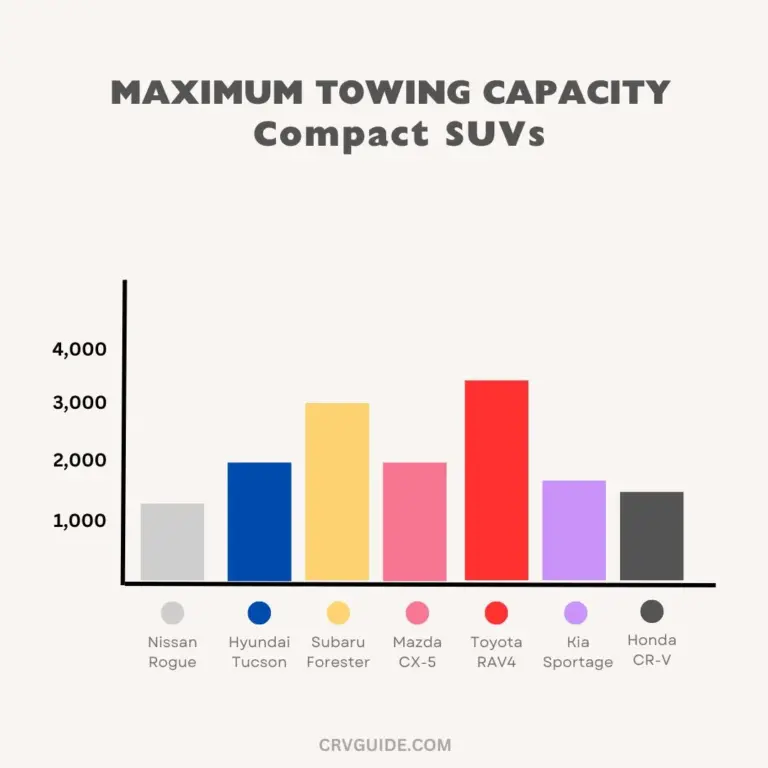
| Max towing | Up to 1,000 lb | 1,750 lb FWD; up to 3,500 lb AWD |
| Ground clearance | 7.8 in FWD; 8.2 in AWD | Up to 8.5 in |
| Touchscreen | 9 in | 10.5 in std; 12.9 in available |
| Seating | 5 | 5 |
Prices are approximate starting MSRPs including destination and will change. CR-V 2027 fuel economy carries over from 2026 EPA ratings; Toyota initially quoted up to 44 mpg combined for the FWD RAV4 Hybrid, and EPA figures by trim vary slightly by source. Confirm with your dealer and fueleconomy.gov.
Performance and Driving
On paper the RAV4 wins. Its 2.5-liter hybrid system makes 226 hp with front-wheel drive and 236 hp with AWD, versus 204 hp for the CR-V Hybrid. AWD RAV4s add a rear electric motor, and the system can send power to the rear wheels without a mechanical driveshaft.
The CR-V’s two-motor system works differently. At low and moderate speeds, the gas engine mostly acts as a generator while an electric motor drives the wheels, and at highway cruise the engine can drive the wheels directly. The result is strong, quiet pull from a stop and a smooth, linear feel in traffic. The CR-V’s suspension is tuned for comfort, and it rides well over broken pavement. We go into more detail in CR-V hybrid performance vs gasoline.
For light trail use, both offer rugged trims: the CR-V TrailSport Hybrid (standard AWD) and the RAV4 Woodland (standard AWD, all-terrain tires, factory hitch receiver). The Woodland’s higher towing rating gives it the edge for campers and boat owners.
Fuel Economy
The RAV4 Hybrid is the efficiency leader. A front-drive RAV4 Hybrid is rated 43 mpg combined against 40 for the front-drive CR-V Hybrid. With AWD, the gap widens: 42 mpg for the RAV4 LE and SE versus 37 for most AWD CR-V Hybrids. Over 15,000 miles a year, AWD versions would use about 357 gallons (RAV4) and 405 gallons (CR-V), a difference of about 48 gallons. That is meaningful but not huge; at $3.50 per gallon it is about $170 a year. For CR-V figures across years, see Honda CR-V mpg ratings.
Space and Practicality
Space is the CR-V’s strongest argument. It offers 41 inches of rear legroom, which makes the back seat one of the roomiest in the class, and Honda lists 76.5 cubic feet of maximum cargo space versus 70.4 in the RAV4. Behind the rear seats the RAV4 is slightly ahead, at 37.8 cubic feet versus 36.3 in most CR-V Hybrid trims (34.7 in the Sport Touring). In practice that 1.5-cubic-foot difference is about one carry-on bag.
One CR-V Hybrid detail to know: the battery sits under the cargo floor, so hybrid trims have a fixed, higher floor than the gas CR-V EX and EX-L. Our CR-V cargo space guide explains the differences between gas and hybrid models.
Technology
The RAV4 has the more modern screen setup. Every 2026 RAV4 gets a 12.3-inch digital instrument cluster and at least a 10.5-inch touchscreen, with a 12.9-inch screen on XSE and Limited. The CR-V Hybrid uses a 9-inch touchscreen, a 7-inch driver display on the Sport Hybrid and a 10.2-inch digital cluster on Sport-L and above. Both offer wireless Apple CarPlay and Android Auto. The CR-V Sport Touring adds Google built-in and Bose audio; the RAV4 Limited adds JBL audio and a panoramic sunroof.
Safety
The RAV4 comes standard with Toyota Safety Sense 4.0, and the CR-V comes standard with Honda Sensing. Both include automatic emergency braking, adaptive cruise control and lane-keeping assist. Neither the 2026 CR-V nor the 2026 RAV4 is listed among IIHS 2026 Top Safety Pick winners for small SUVs. The 2026 CR-V scored Good in the small overlap front and side tests but Poor in the updated moderate overlap test, which focuses on rear-passenger protection. Check iihs.org for the latest results, as testing of redesigned models can lag their launch. Our CR-V safety rating page has more background.
Cost of Ownership and Warranty
Both brands provide 3-year/36,000-mile basic and 5-year/60,000-mile powertrain coverage. Toyota adds two advantages for hybrid buyers:
- Hybrid battery: 10 years/150,000 miles on the RAV4, transferable to the next owner.
- ToyotaCare: 2 years/25,000 miles of scheduled maintenance plus 2 years of roadside assistance.
Honda covers the CR-V’s high-voltage battery through its emissions-related warranty; terms vary by state, so read the details in our CR-V hybrid battery guide. On price, the RAV4 starts about $4,200 lower, though that compares a base RAV4 LE with a better-equipped CR-V Sport Hybrid. Comparing similarly equipped AWD trims narrows the gap, so price the exact trims you want.
Which Should You Buy?
- Buy the RAV4 Hybrid if you want the lowest fuel use, especially with AWD.
- Buy the RAV4 Hybrid if you tow. AWD models are rated for up to 3,500 lb versus 1,000 lb for the CR-V Hybrid.
- Buy the RAV4 Hybrid if you want the lowest entry price and bigger standard screens.
- Buy the CR-V Hybrid if you carry adults in the back or need the most cargo space with the seats folded.
- Buy the CR-V Hybrid if ride comfort and a quiet cabin matter more to you than a few mpg.
- Consider the RAV4 Plug-in Hybrid (from about $42,950) if you can charge at home. Toyota rates it at up to 52 miles of electric range on the SE and 324 hp combined. Honda does not offer a plug-in CR-V in most of the US.
FAQ
Which gets better mpg, the CR-V Hybrid or RAV4 Hybrid?
The RAV4 Hybrid. It is rated 43 mpg combined with FWD and 42 with AWD (LE and SE), versus 40 and 37 for the CR-V Hybrid.
Which has more cargo space?
The RAV4 has slightly more behind the rear seats (37.8 vs 36.3 cubic feet), but the CR-V Hybrid offers more with the seats folded: 76.5 cubic feet by Honda’s figure versus 70.4.
Can the CR-V Hybrid tow as much as the RAV4 Hybrid?
No. The CR-V Hybrid is rated up to 1,000 lb. The RAV4 Hybrid is rated 1,750 lb with FWD and up to 3,500 lb with AWD.
Is the CR-V Hybrid more powerful than the RAV4 Hybrid?
No. The CR-V Hybrid makes 204 hp, while the 2026 RAV4 Hybrid makes 226 hp with FWD and 236 hp with AWD.
Conclusion
The 2026 RAV4 Hybrid moved ahead on efficiency, power, towing and screens, and it starts for less. The CR-V Hybrid still has the roomier cabin, larger maximum cargo area and a comfortable, refined drive. Test-drive both on your normal routes, sit in the back seat, and compare out-the-door prices on matching trims, since dealer pricing and incentives change throughout the year.