Honda CR-V vs Honda HR-V: Which Honda SUV Fits You?
Pick the Honda HR-V if you mostly drive alone or as a couple, park in tight city spaces and want to keep the price close to $30,000. Pick the Honda CR-V if you carry adults in the back seat, haul bulky gear, take long highway trips or want a hybrid. The CR-V costs about $5,000 more to start, and for most households that money buys a lot more space, power and fuel economy.
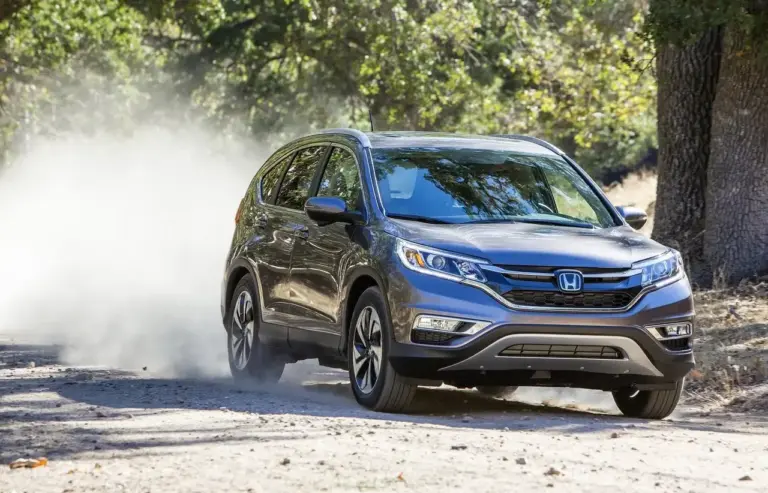
Both are Honda crossovers with five seats and optional all-wheel drive, so they are easy to confuse on a dealer lot. In practice they sit in different size classes: the HR-V is a subcompact, and the CR-V is one of the roomiest compact SUVs you can buy. Here is how they compare in the numbers and on the road.

2027 Honda CR-V vs 2027 Honda HR-V: Key Specs
| Spec | 2027 Honda CR-V | 2027 Honda HR-V |
|---|---|---|
| Starting price (incl. destination) | From approx. $33,070 (LX FWD) | From approx. $28,050 (LX FWD) |
| Powertrains | 1.5L turbo 4-cyl (LX, EX, EX-L); 2.0L two-motor hybrid (Sport and up) | 2.0L 4-cyl |
| Horsepower / torque | 190 hp / 179 lb-ft (gas); 204 hp / 247 lb-ft (hybrid) | 158 hp / 138 lb-ft |
| Transmission | CVT (gas); eCVT (hybrid) | CVT |
| EPA combined mpg | 30 FWD / 29 AWD (gas); 40 FWD / 37 AWD (hybrid) | 28 FWD / 27 AWD |
| Cargo, rear seats up | 39.3 cu ft (gas); 36.3 cu ft (hybrid) | 24.4 cu ft |
| Cargo, rear seats folded | 76.5 cu ft (gas) | 55.1 cu ft |
| Rear legroom | 41.0 in | 37.7 in |
| Length | 184.8 in | 179.8 in |
| Max towing | Up to 1,500 lb (gas); up to 1,000 lb (hybrid) | Not listed |
| Seating | 5 | 5 |
Prices are approximate starting MSRPs including the destination charge and will change during the model year. Fuel economy figures for 2027 carry over from the 2026 EPA ratings. Confirm pricing and equipment with your Honda dealer before you buy.
Driving: Turbo and Hybrid vs a Simple Four-Cylinder
The biggest day-to-day difference is the engine. The HR-V uses a naturally aspirated 2.0-liter four-cylinder rated at 158 hp and 138 lb-ft. It is smooth and predictable around town, but merging onto a fast highway or passing on a two-lane road with passengers aboard requires planning. The CVT keeps the engine in its power band, which also means you hear it working when you push hard.
The CR-V starts with a 1.5-liter turbo making 190 hp and 179 lb-ft. Turbo torque arrives low in the rev range, so the CR-V feels more relaxed at highway speed and with a full load. The hybrid trims go further: 204 hp and 247 lb-ft, with electric motors doing much of the work at low speed. That gives the hybrid the quickest, quietest launch in the CR-V lineup. If you want to understand how the hybrid system splits work between the engine and motors, our CR-V hybrid vs gasoline performance comparison goes deeper.
Both models offer Honda’s Real Time AWD. On the HR-V and gas CR-V it adds $1,500; on the CR-V Hybrid it is optional on Sport and Sport-L and standard on TrailSport and Sport Touring. For help deciding whether you need it, see our Honda CR-V FWD vs AWD guide.
Fuel Economy
The CR-V wins here even though it is the bigger vehicle. A front-drive gas CR-V is rated 30 mpg combined, two better than a front-drive HR-V at 28. The CR-V Hybrid with front-wheel drive is rated 40 mpg combined, and most AWD hybrid trims are rated 37 (the TrailSport is 35). Over 15,000 miles a year, the gap between 28 and 40 mpg is roughly 160 gallons of fuel. Our CR-V mpg ratings by year and trim has the full breakdown.
Space: Where the CR-V Pulls Away
Cargo and rear-seat room are where these two SUVs stop being alternatives to each other.
- Cargo: The gas CR-V offers 39.3 cubic feet behind the rear seats, about 60 percent more than the HR-V’s 24.4. With the seats folded, the CR-V reaches 76.5 cubic feet versus 55.1 in the HR-V. The hybrid’s battery raises the floor slightly and trims seats-up space to 36.3 cubic feet, still far ahead of the HR-V.
- Rear legroom: The CR-V offers 41.0 inches, the HR-V 37.7. That 3.3-inch difference is what separates “adults are comfortable for three hours” from “fine for a trip across town.”
- Footprint: The HR-V is 5 inches shorter at 179.8 inches. That makes it easier to park on the street or in a small garage, and its tighter dimensions are its main practical advantage.
A rear-facing child seat fits much more comfortably in the CR-V, and the CR-V can take a full-size stroller plus groceries without folding a seat. For measured cargo figures by generation, see Honda CR-V cargo space.
Technology and Features
Honda closed the tech gap for 2026. Both models now have a standard 9-inch touchscreen, wireless Apple CarPlay and Android Auto, and wireless phone charging. The HR-V uses a 7-inch digital instrument display across the board. The CR-V uses a 7-inch display on LX, EX and Sport, and a 10.2-inch fully digital cluster on EX-L and higher trims.
The CR-V’s top Sport Touring Hybrid adds Google built-in and a Bose audio system, features the HR-V does not offer. The HR-V counters with heated front seats on Sport and EX-L and an available power moonroof, which keeps its mid trims well equipped for the money.
Safety
Both models come with the Honda Sensing suite of driver-assistance features, including automatic emergency braking and lane-keeping assist. Crash-test results, however, currently favor the smaller SUV. The IIHS named the 2026–27 HR-V a Top Safety Pick+. The 2026 CR-V did not earn an IIHS award: it scored Good in the small overlap front and side tests but Poor in the updated moderate overlap front test, which measures protection for a rear-seat passenger. Families who regularly carry adults or older children in the back should weigh that result. Read our Honda CR-V safety rating overview for context, and check iihs.org for the latest results, since ratings can change when a vehicle is updated.
Cost of Ownership
The HR-V is cheaper to buy, and that matters. The starting price gap is about $5,000 (LX to LX), and at the top it is about $5,450 (HR-V EX-L at roughly $31,900 vs CR-V EX-L at roughly $37,350). Smaller tires and a simpler engine also tend to keep replacement costs modest.
The CR-V gets some of that money back. Its better fuel economy, especially as a hybrid, reduces running costs every month, and the CR-V has long held its value well on the used market. Insurance usually costs a little more on the larger, pricier vehicle, so get quotes for both before deciding.
Which Should You Buy?
- Buy the HR-V if you are single or a couple, drive mostly in the city, park on the street, and want a new Honda SUV for around $28,000 to $32,000.
- Buy the HR-V if IIHS crash-test performance is your top priority and you rarely use the back seat for long trips.
- Buy the CR-V if you carry rear passengers regularly, have a child seat, or need real cargo room for sports gear, dogs or luggage.
- Buy the CR-V Hybrid if you drive a lot. Its 40 mpg combined (FWD) rating and stronger acceleration make it the better long-term SUV.
- Buy the CR-V if you plan to tow a small trailer; the gas model is rated up to 1,500 lb.
FAQ
Is the HR-V much smaller than the CR-V?
Yes. The HR-V is 5 inches shorter, has 3.3 inches less rear legroom, and offers 24.4 cubic feet of cargo space behind the rear seats compared with 39.3 in the gas CR-V.
Does the Honda HR-V come as a hybrid?
Not in the US. The 2027 HR-V uses only a 2.0-liter four-cylinder. If you want a hybrid Honda SUV, the CR-V Hybrid is the smallest option.
Which gets better gas mileage, the CR-V or HR-V?
The CR-V. A front-drive gas CR-V is rated 30 mpg combined versus 28 for the front-drive HR-V, and the CR-V Hybrid reaches 40 mpg combined with FWD.
Is the CR-V worth $5,000 more than the HR-V?
For families and frequent highway drivers, usually yes, because you get much more rear-seat and cargo space plus more power. For city drivers who rarely use the back seat, the HR-V delivers most of what they need for less.
Conclusion
The HR-V is a well-priced, easy-to-park Honda with strong crash-test results, and it suits small households. The CR-V is the more capable all-rounder, with more power, better fuel economy, and far more room for people and cargo. Sit in the back seat of both and load your own gear before you sign, and check current dealer pricing, since incentives can narrow or widen the gap.