Honda CR-V Camping and Road Trip Guide: Cargo and Sleeping
Yes, you can comfortably road-trip and car-camp in a current Honda CR-V: with the rear seats folded, the floor is roughly 73 inches long, enough for most adults up to about 6 feet to sleep flat with a pad that bridges the seatback step. A gas CR-V EX or EX-L has the most usable cargo space, a hybrid gives you far more range per tank, and a roof box or hitch carrier handles the overflow. Just respect the 165-lb roof limit and skip heavy rooftop tents.
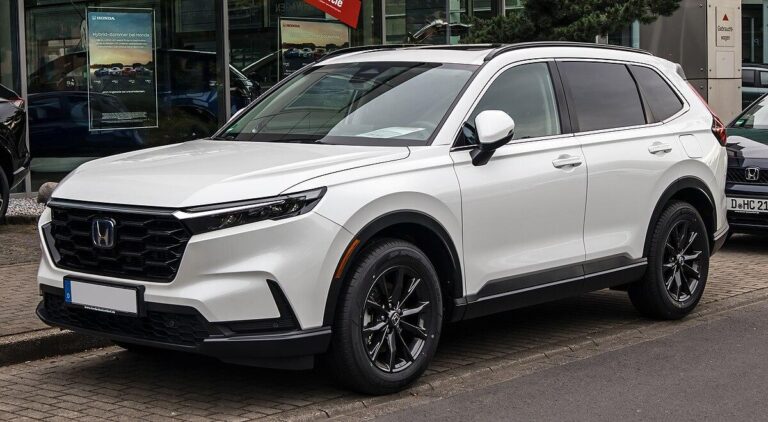
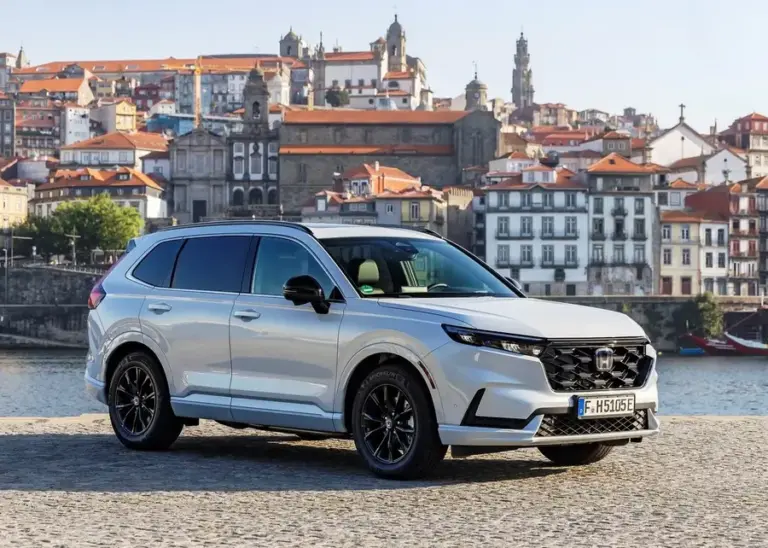
This guide covers the sixth-generation CR-V (2023–2027). It explains how much fits inside, how to add capacity outside, and how to set up a simple sleeping platform without permanent modifications.

CR-V Cargo Space and Road-Trip Numbers
| Measurement (2023–2027 CR-V) | Figure | Notes |
|---|---|---|
| Cargo behind rear seats, gas (LX, EX, EX-L) | 39.3 cu ft | Honda figure |
| Cargo behind rear seats, hybrid | 36.3 cu ft | 34.7 cu ft on Sport Touring |
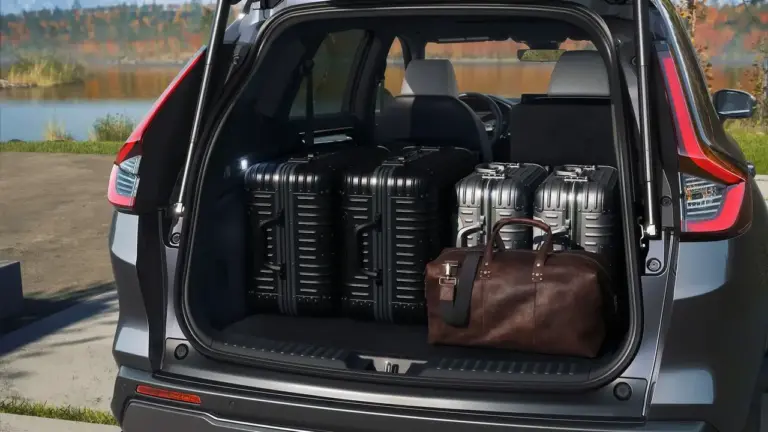
| Cargo with rear seats folded | 76.5 cu ft | Honda figure; hybrid figures vary slightly by source |
| Floor length, rear seats folded | Approx. 73 in | Owner-measured, tailgate to front seatbacks; changes with front-seat position |
| Usable floor width | Approx. 44 in | Owner-measured; narrower between the wheel wells |
| Interior cargo height | Approx. 36 in | Owner-measured |
| Roof load limit (driving) | 165 lb | Owner’s manual; includes the rack itself |
| Max towing | Up to 1,500 lb (gas); up to 1,000 lb (hybrid) | Check your trim and owner’s manual |
| Ground clearance, hybrid | 7.8 in FWD; 8.2 in AWD | Gas figures vary by trim |
| Fuel tank, hybrid | 14 gal | About 500+ miles of range at the 37 mpg AWD rating |
Owner-measured dimensions are approximate. Measure your own vehicle before buying a mattress, platform or cargo organizer. For more detail on floor dimensions by generation, see our Honda CR-V cargo length and width guide.
Gas or Hybrid for Road Trips?
Both work, with different strengths. Gas CR-V EX and EX-L trims have a two-position cargo floor; set it low for taller loads or high for a flatter surface when the seats are folded. Hybrids have a fixed, slightly higher floor because the battery sits underneath, which costs a few cubic feet behind the rear seats.
The hybrid’s advantage is range and quiet. At 37 mpg combined (AWD) on a 14-gallon tank, you can expect roughly 500 miles between fill-ups in mixed driving, fewer stops on long highway days. The gas model tows more (up to 1,500 lb versus 1,000 lb), which matters if you pull a small teardrop or utility trailer. See our CR-V towing capacity guide for ratings by year.
Packing the Cargo Area: A Simple System
- Weigh your load. Passengers, cargo, roof load and hitch load all count toward the CR-V’s payload. Our CR-V load capacity guide explains how to find the figure on your door-jamb sticker.
- Heavy items low and forward. Put coolers, water jugs and tool bags on the floor, close to the rear seatbacks. This keeps the center of gravity low and helps the car handle normally.
- Use soft bags over hard cases. Duffels compress into the irregular space around the wheel wells; hard suitcases waste it.
- Keep the “first night” bin by the tailgate. Headlamp, stove, dinner, toiletries and a jacket go in one bin you can reach without unpacking.
- Keep sightlines clear. Do not stack cargo above the rear seatbacks. It blocks your mirror and can become a projectile in a hard stop.
- Use the 60/40 split. Folding just one side of the rear seat lets you carry long items such as skis or a camp table while keeping a seat for a passenger.
Roof Racks and Cargo Boxes
Roof capacity is where CR-V owners most often go wrong. Honda’s owner’s manual sets a 165-lb limit for the rack plus cargo while driving. If your crossbars weigh 15 lb and your cargo box weighs 40 lb, you have about 110 lb left for gear. Some aftermarket racks are rated lower than 165 lb, and the lower number always applies. Read Honda CR-V roof rack weight limit and safety before you load up.
- Rails first: Most CR-Vs need roof rails before crossbars can be fitted. Honda’s genuine 2023+ crossbars are designed to mount to the rails and are rated for 165 lb.
- Light, bulky items on top: Sleeping bags, camp chairs, tents and clothes belong in the roof box. Keep heavy gear inside.
- Rooftop tents: A hardshell rooftop tent that weighs 120 to 130 lb empty leaves almost no margin once you add crossbars. For a CR-V, sleeping inside the vehicle or in a ground tent is the safer choice.
- Expect lower mpg: A roof box adds drag. Remove it between trips to recover fuel economy.
Hitch Carriers and Bike Racks
A receiver hitch opens up hitch-mounted bike racks and cargo trays, which keep weight low and off the roof. Check the hitch’s tongue-weight rating and the limit in your owner’s manual, and count the carrier itself plus its load. Make sure your license plate and taillights stay visible, or add a light kit. Honda and aftermarket hitch options are covered in our Honda CR-V accessory guide.
How to Sleep in a Honda CR-V
The CR-V’s folded floor is long enough for most adults, but the rear seatbacks do not fold perfectly flat, and there is a small step between the seatbacks and the cargo floor. Here is a simple, no-tools setup.
- Prepare the front seats. Slide both front seats fully forward and tilt the backrests upright. This adds the most length to the sleeping area.
- Fold the rear seats. On gas EX and EX-L models, set the cargo floor to its upper position to reduce the step.
- Level the surface. Fill the gap at the seatback step with a folded blanket, a firm foam block or a storage bin of the right height. This makes the biggest difference to comfort.
- Choose the right mattress. A twin-width (about 38 inches) foam pad or self-inflating mat fits between the wheel wells. A queen air mattress is about 60 inches wide and will not lie flat. Two narrow pads side by side work well for couples.
- Ventilate. Crack two windows slightly, ideally with window rain guards or mesh covers to keep bugs and rain out. Condensation builds up quickly with two people inside.
- Block the light. Custom-cut reflective window covers add privacy, keep the car cooler in the morning and help it stay warmer on cold nights.
- Keep the keys handy. Store the key fob where you can reach it, so you can unlock or sound the alarm without climbing out.
Safety Notes for Sleeping in the Car
- Never sleep with a gas engine idling in an enclosed space or where snow could block the exhaust; carbon monoxide can build up.
- Do not use propane heaters or stoves inside the vehicle.
- Check local rules; overnight parking is restricted in many areas. Campgrounds and designated dispersed sites are the safest choice.
- Avoid draining the 12-volt battery with lights or chargers overnight. A portable power station is a better way to run devices.
Comfort on Long Drives
The CR-V is a relaxed highway car, and a few habits make long days easier. Plan fuel stops before you reach remote stretches, check tire pressure cold each morning (especially with a heavy load), and use adaptive cruise control on open highways to reduce fatigue. Our highway cruising and long-trip comfort article covers seat comfort, noise and cruise behavior in more detail.
FAQ
Can a 6-foot person sleep in a Honda CR-V?
Usually, yes. With the front seats pushed forward, owners report about 73 inches of floor length, which fits a 6-foot sleeper with a little room to spare. Taller people may need to sleep slightly diagonally.
Do the CR-V rear seats fold flat?
Nearly. There is a small step and a slight angle at the folded seatbacks, which a firm pad, blanket or bin can level out. Gas EX and EX-L trims have a raised cargo floor position that helps.
Can I put a rooftop tent on a Honda CR-V?
It is not recommended. Honda’s roof limit while driving is 165 lb including the rack, and many hardshell tents weigh 120 lb or more on their own.
Is the CR-V Hybrid good for road trips?
Yes. Its 37 to 40 mpg combined ratings give it a long range on a 14-gallon tank, though it tows less and has slightly less cargo space behind the rear seats than the gas model.
Conclusion
The CR-V is a capable road-trip and car-camping vehicle with a long cargo floor, a big folded cargo volume and good highway manners. Pack heavy items low, keep roof loads light, level the floor for sleeping, and measure your own vehicle before buying gear. A few inexpensive items such as a foam pad, window covers and a roof box are all you need to turn it into a comfortable base camp.